
In 2025, remote work continued to reshape how businesses operate and how employees participate in the workforce. This report revisits the key developments of the past year, highlights the trends that defined workplace dynamics, and looks ahead to what these shifts mean as we approach 2026.
Today, the world of work is more polarised than ever. Calls for return-to-office mandates clash with workers who refuse to give up their hard-earned flexibility.‡ At the same time, many Gen Z professionals are returning to office spaces in search of structure, mentorship, and reduced isolation.‡
Week after week, headlines suggest that the balance is shifting. One wave rises, another retreats. Yet one truth remains steady: remote work continues to dominate the conversation. It lies at the centre of today’s workplace debate and shows no signs of disappearing.

Office Attendance: Small Increase vs Flat as a Pancake
Headlines often swing between announcing the end of remote work and declaring its rise. The clearest way to cut through the noise is to look at the data from the third quarter of 2025.
Two-thirds of U.S. firms (66%) still offer location flexibility. This represents a small decline from 2024, when 68% did. Interestingly, 5% of companies are now more flexible than they were two years ago.‡
The full breakdown looks like this:‡

Out of all fully flexible companies, 5% are fully remote, while the remaining 19% allow employees to choose freely how much they work from home versus the office.
🌪 The twist? While employers are calling people back, employees aren’t fully complying. Between Q1 2024 and Q3 2025, the number of required office days rose 12%, but actual attendance increased by only 1–3%, depending on the source.‡
📣 According to Stanford’s Nick Bloom, the mix of remote vs office days remains “flat as a pancake".‡
Understanding Low RTO Compliance
Bloom points to what he calls the “composition effect” to explain the gap: overall WFH levels appear flat because older, shrinking firms are cutting flexibility, while younger, fast-growing ones are quietly expanding it.
The averages even out, but only the RTO headlines make the news.‡
A Predominantly White, Male Remote Workforce
If you ask who’s still lucky enough to be working from home, the short answer might surprise you: apparently, half of the U.S. workforce is.
Smaller companies remain the champions of flexibility — 67% of firms with under 500 employees are fully flexible, covering roughly half of the U.S. workforce.‡
The trend is especially strong in sectors built around digital or client-based work.‡
Highest numbers of fully remote openings are posted in following sectors at the moment: 💻 Computer & IT, 🗓 Project Management, 🤝 Sales, 🏢 Operations and 🧚 Customer Service.‡
Most of these roles are for experienced positions (66%), followed by manager (27%) and entry-level (7%) jobs.‡
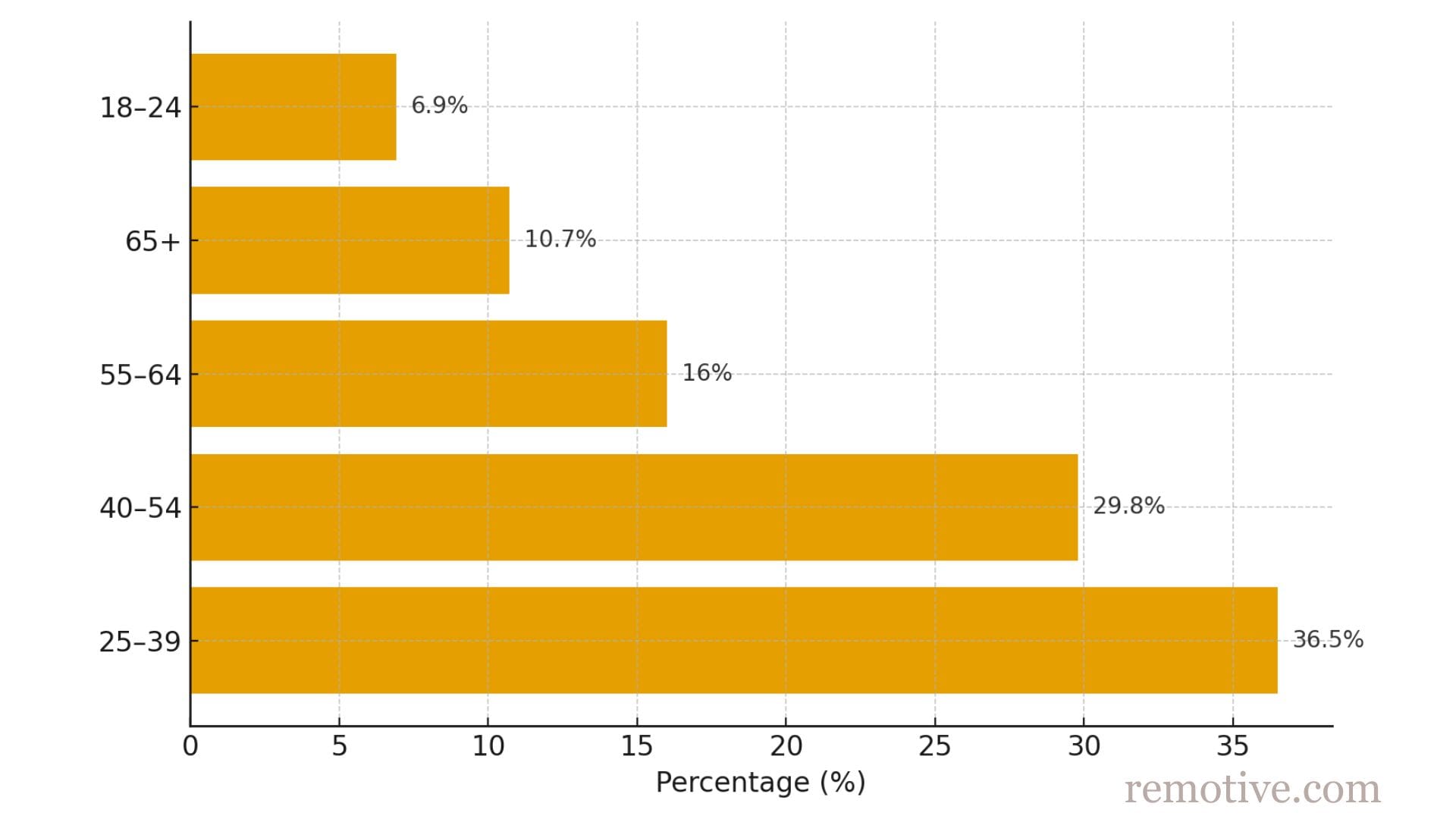
The age distribution of remote workers is best illustrated in the chart below.
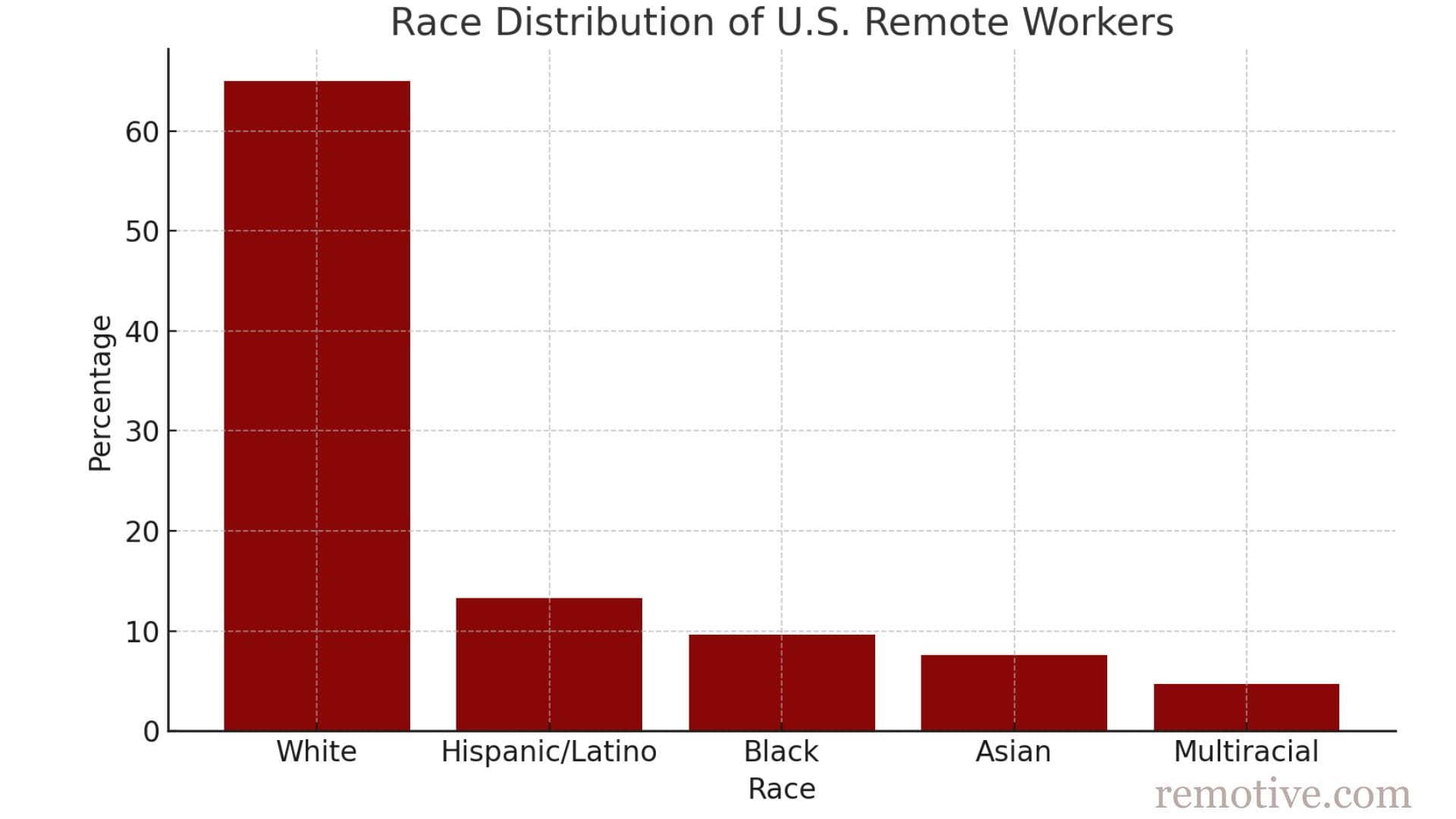
👨🏻💻 WFH workforce remains predominantly white and male. Nearly half of the US remote workers identify as male, and they're distributed by race as follows:
CEO's who are first to offer flexibility and remote work are young (<30) females. Generally, studies suggest that the younger the CEO, the more likely they are to offer flexible arrangements.‡
Where Remote Workers Actually Work
One of our LinkedIn polls on remote work sparked an unusually lively debate. The question was simple: where do remote workers actually prefer to work from? A coworking space, a favorite coffee shop, or simply home? ‡
Out of nearly 4,000 votes, the results were striking:
🏢 Coworking space — 3%
☕ Coffee shop — 4%
🏠 Home — 93%
📣 One respondent summed it up perfectly:
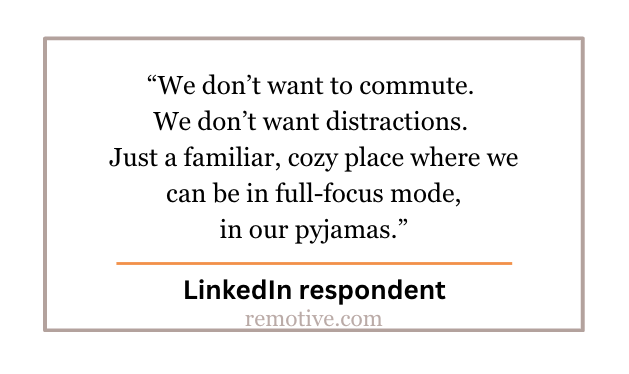
Freedom to work from anywhere often leads people back to the place they control most: home. For many, this is not just a preference, it’s essential. Disabled and neurodivergent workers frequently rely on home setups as the only environment where they can perform at their best.
Remote Work in 2026: Right or Perk?
Remote work enables countless individuals to stay employed who might otherwise be forced out of the labor market.
About 5.7 million people with disabilities are currently employed nationwide in USA, an increase of more than 500,000 workers since September 2021.‡ The rise didn’t occur in fields unsuitable for remote work, underscoring a clear correlation between WFH and the employability of people with disabilities.‡
This makes remote work far more than a preference. It represents access — particularly for:
🧑🦽 Workers with disabilities
🤰 Working mothers
🦄 Neurodivergent professionals
…and many others.

Mandated office returns risk undoing these gains and undermining companies’ commitments to inclusion.‡
Taking the remote option away isn’t simply a policy shift; it edges toward limiting the right to work itself. For millions, remote work is the bridge that keeps them in the economy: contributing and thriving.
Hiring Trends: RTOs, Job Huggers, and the Great Pushback
Hiring trends always mirror the market mood. Over the past year, especially in tech, that mood has been bleak.
▲ The upside is simple: when things hit bottom, the only way forward is up.
Until that recovery arrives, the power sits squarely with employers. In a market where remote jobs are scarce and applicants are many, companies hold the ball, and lately, they have been throwing it in unpopular directions. 🏒
Push for RTOs
Pandemic restrictions faded and economic uncertainty grew, questions of trust and productivity gave many large firms the perfect excuse to push for RTOs.
In 2025, Amazon, Dell, Apple, Google, IBM, Meta, Salesforce, and dozens of others have doubled down on demands for employees to return to the office at least three days a week, if not all five.‡
Compliance of the "Job Huggers"
In response, employees prioritizing security quietly complied. Others refused to trade flexibility for long commutes and the patronizing treatment of being managed like kids who can’t be trusted to work on their own.
We all still remember the striking headlines about Dell’s RTO‡:

The message was loud and clear: remote work is not just a perk workers are willing to negotiate; it is a deal-breaker.‡
🌪 The twist? Many suspect companies saw this coming. RTOs, they argue, are a quiet way to trim staff without formal layoffs.‡
📣 As tech veteran Joe Procopio genuinely puts it:
"And that kinda worked. But kinda didn’t. Sure, the troublemakers all found the door and gave the finger on the way out, but the go-along-to-get-along crowd stopped performing and got performative, and the rest of the tech workforce got ready to revolt. Then the employers got bailed out by the worst tech labor market in history."‡
The Return of Talent Power
The real test will come once the job market shifts again and talent, not companies, regains control.
When that happens, the same firms tightening their grip today may find themselves loosening it fast, as retention becomes the next big headline.
And to end the year on a good note: this might happen sooner than we expect! Recent research shows that the “great freeze in hiring” is beginning to thaw, with 63% of businesses preparing to increase hiring in the year ahead.‡
2025: Wins and Losses in Remote Work
🚀 Win: Async takes the stage.
As remote work matures, asynchronous communication has become a key theme — and increasingly, a requirement.
The first to go? Endless 🙌 “all-hands” meetings, 🧵email threads about emails and 📝 check-ins that could have been async updates.
As the end of 2025 nears, async-first companies are showing what true respect for multiple time zones looks like, and how it unlocks genuine work-life balance.‡
⚠️ Loss: The rise of the contractor model.
Employers have learned that flexibility works both ways. While international contracting has always been part of global hiring, the economic uncertainty of 2025 has pushed more employers to choose contractors rather than permanent employees.‡
▲ The upside for companies is obvious: faster hiring, lower costs, and fewer compliance challenges.
▼ The downside is equally clear: weaker team cohesion, lower loyalty, and growing frustration among workers stuck in the “no benefits” model.
🌪Plot twist: Some professionals actually enjoy fractional hiring and the opportunity to sharpen their business skills in different environments.‡
🚀 Win: Time over money.
Across surveys, workers consistently say they would accept lower pay in exchange for greater flexibility. The value of time, autonomy, and balance is now openly competing with salary in shaping job satisfaction.‡

⚠️ Loss: The gentrification effect.
A smaller fraction of remote workers — digital nomads — are unintentionally reshaping local economies. In cities like Lisbon, high-earning foreign remote professionals often outprice locals, driving up rents and daily living costs.‡
The freedom to work from anywhere, it turns out, can carry unintended social consequences for the places that host it.
🚀 Win: Pay transparency goes mainstream.
Beyond legal mandates, transparency has become a competitive advantage. Open pay practices build trust, reduce inequity, and strengthen retention. But they also expose internal pay gaps and push employers to rethink outdated compensation models.‡
⚠️ Loss: Increased employee tracking. Alongside the rise of tools that support remote work came a rise in tools that monitor remote workers.
In our LinkedIn poll, 26% of nearly 500 respondents said their employer had noticeably increased monitoring over the past year — using methods like time-tracking software and‡, in more extreme cases, requiring employees to stay on camera throughout the day to mimic an office environment.
The Most Loved Sides of Remote Work
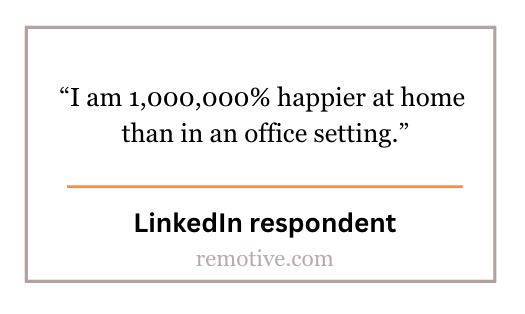
Beyond flexibility and freedom, remote work offers a set of everyday benefits that redefine what people value in their jobs.
These are the aspects people love the most:
🏆 No commute (44%)
For most workers, this remains the number one perk. Remote work eliminates the hours spent in traffic or public transport for tasks easily done from home.
🥈 Freedom to live anywhere (26%)
Without the need to live near an office, people choose locations that better match their lifestyle — quieter neighborhoods, lower rent, cleaner air.
🥉 More work-life balance (18%)
Flexibility makes it easier to show up for life outside of work: picking up kids, running errands off-peak, or managing personal time with autonomy. It gives people ownership of their days again.
💫 Higher productivity (12%)
Many remote professionals report sharper focus and stronger output when office distractions are gone. Deep work becomes far more achievable.
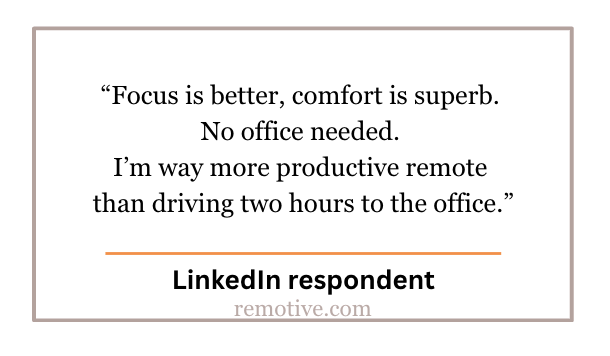
📣 Our community additionally highlighted perks like:
How People Use Their Extra Time
The time gained back from removing commutes and office distractions doesn’t disappear — it gets reinvested. According to our community, most people use those reclaimed hours to 🏃♀️ exercise more (45%) and🧘♀️ invest in their mental health (37%), followed by 👥 socialising, 😴 getting more sleep, 🛁 relaxing more, 👨👩👧👦 spending more time with family, 🎨 learning new skills and 🎸 embracing hobbies.
Remote Work Challenges
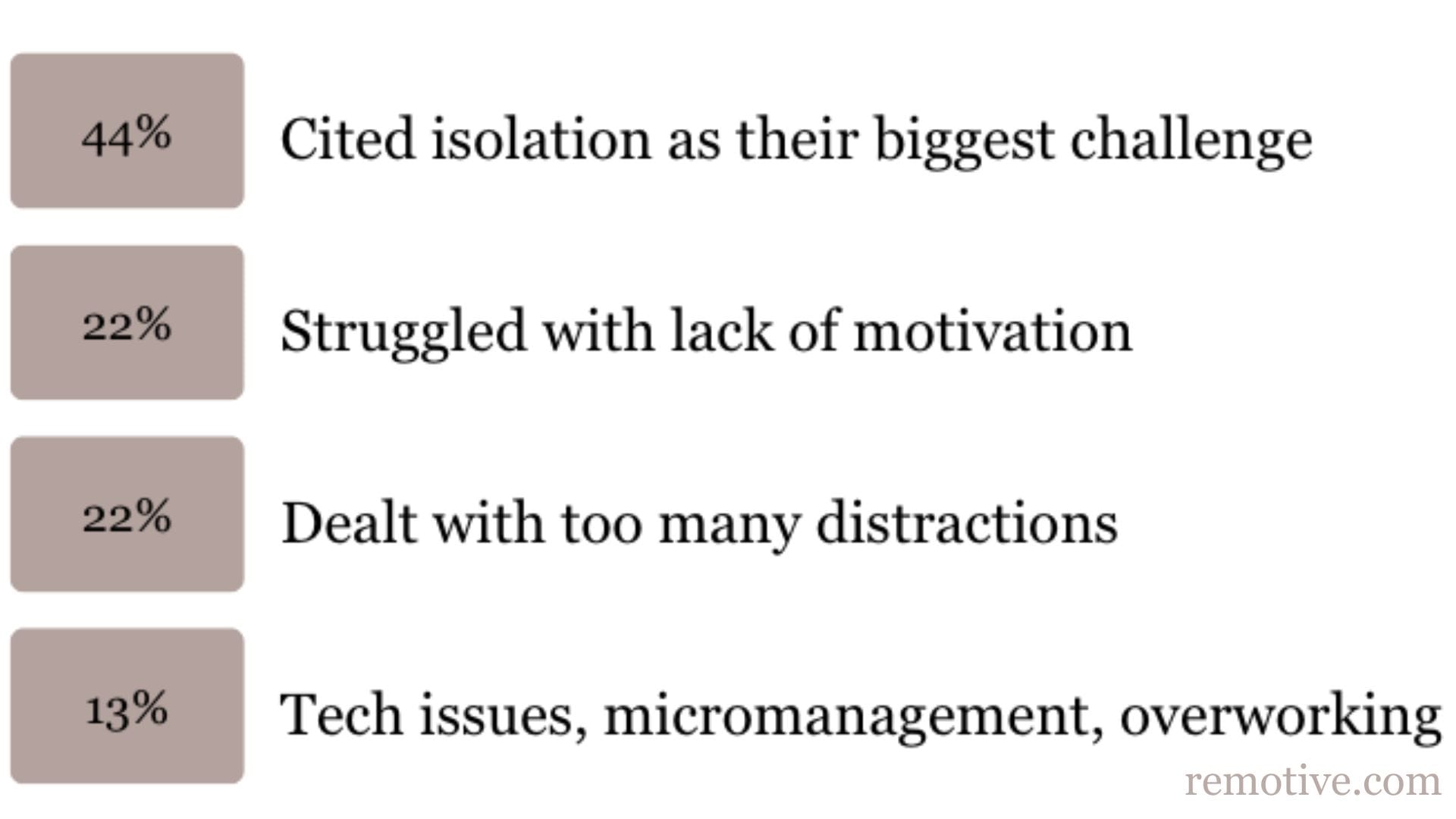
Even a work model as beneficial as remote work comes with its own challenges. Media coverage often points to rising feelings of 🧍🏿♂️isolation (especially among Gen Z, who sometimes consider returning to the office for more social interaction)‡, dips in motivation, “quiet overworking” driven by blurred work–life boundaries‡, and concerns about 🐌 slower career progression compared to in-office or hybrid peers‡.
Our LinkedIn community echoed many of these points, with nearly 1,000 people responding. Here’s how their answers broke down:
Possible Solutions:
🧍♂️ Combat isolation
Make social connection intentional. Schedule regular meet-ups with friends or family, and consider working 1–2 days a week from a favourite coffee shop or coworking space. Sometimes simply getting dressed can boost your mood and restore a sense of belonging.
🔥 Rebuild motivation
Start by identifying the root cause: has this feeling always been present, or did it appear with remote work or life changes? Understanding why motivation dipped is often the first step toward improving it. Time-block your day and stick to a clear structure — discipline helps, because deadlines arrive whether motivation shows up or not.
🔕 Reduce distractions
A poor workspace can sabotage productivity. If home is too noisy and coworking feels too expensive, look for quieter, affordable alternatives like libraries. Silence notifications during deep-work periods, put your phone away, and let the cat nap on your partner’s keyboard for once.
🗂️ Optimise your setup and boundaries
🎧 Invest in good tech, it’s always worth it; 🔁 Don’t stay available 24/7, it never works long-term; ⚡ Normalize slower replies - instant responses shouldn’t be the default.;🔒 Respect your team’s boundaries and communicate your own.
Company Culture Non-Negotiables
Side by side with remote-work challenges stands company culture: that mix of good practices, communication norms, and thoughtfully chosen tools that can make all the difference. It shapes not only the daily experience of individual remote workers but also overall performance and long-term success.
According to our LinkedIn community, these are the non-negotiables of a healthy remote-first culture:
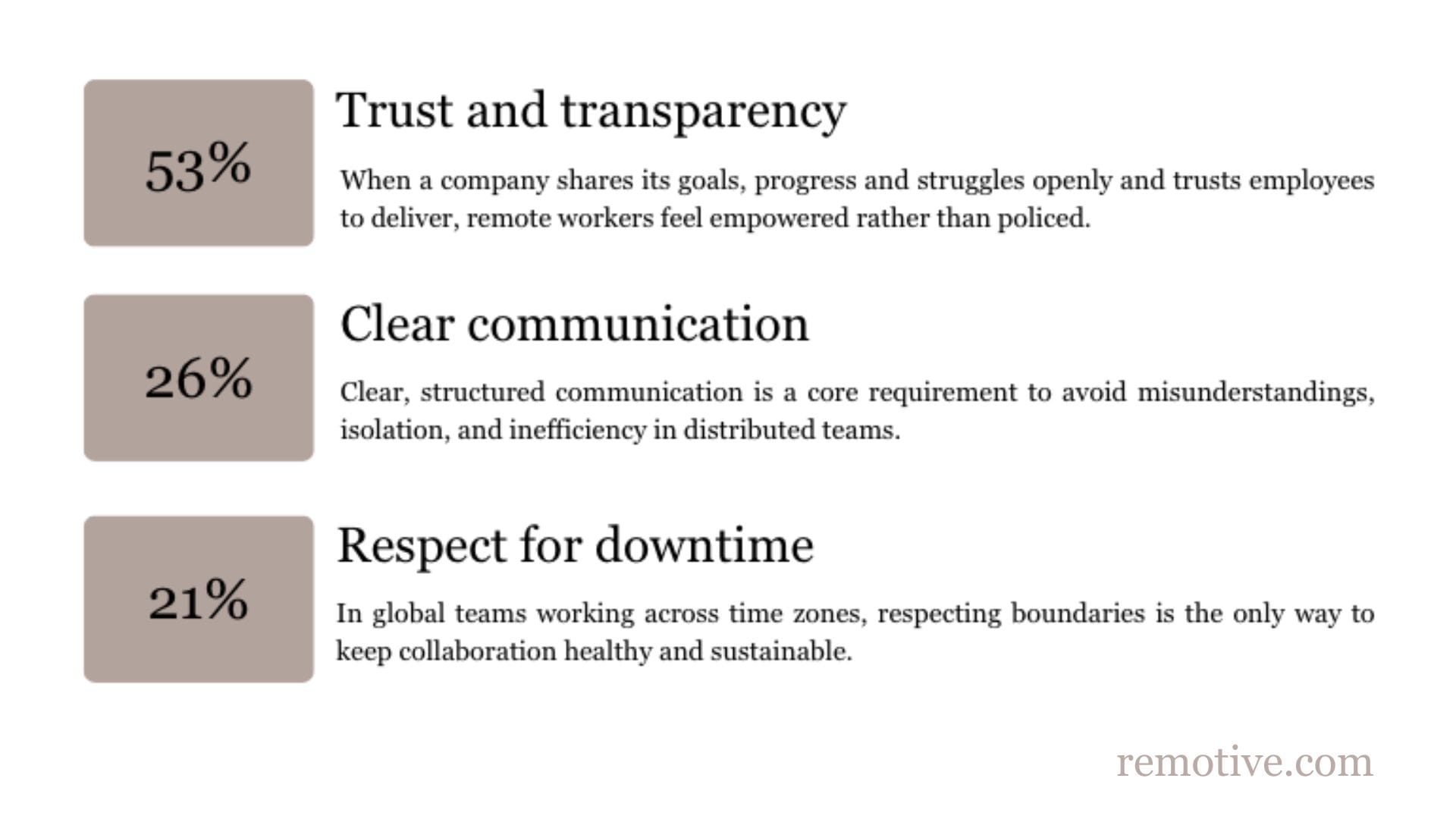
📣 As one respondent sharply commented:
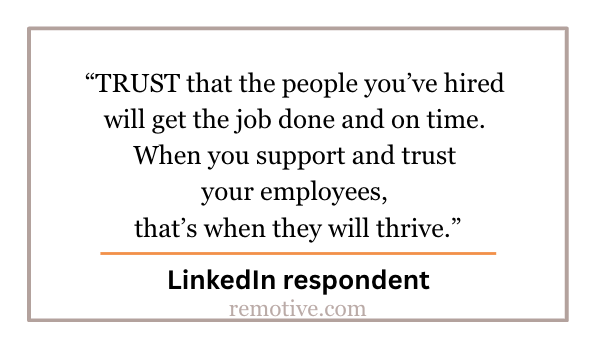
Remote work may rely on tools and technology, but its foundation is still built on human principles: 🤝 trust, 💧 clarity, and 🙏 respect.
📣 Chase Warrington, head of operations at Doist, writes:
"Company culture has nothing to do with the office, and even less to do with virtual Zoom happy hours. It’s much more complex, and although many see this as a challenge to overcome when moving to a remote model, it’s actually an awesome opportunity to intentionally curate the space for your team to connect and thrive"‡.
The Pitfalls of Remote Talent Acquisition
It’s debatable whether recruiting has ever been harder than it is today. Recruiters are navigating a constantly shifting job market where the rising desire for flexibility clashes with a year of layoffs, hiring freezes, and cautious budgets. Add to that the first true wave of AI-influenced applications, and the job gets even more complex.🧶

Hiring teams now sort through unprecedented volumes of AI-generated résumés. Remote recruiters face an extra layer of difficulty: ensuring candidates aren’t quietly using AI tools during interviews, especially when answering technical or situational questions.
One viral example said it all. 📣A remote recruiter recently asked a candidate to “close eyes and answer the question”‡ to prevent AI-assisted responses. It was funny, a bit surreal, and a perfect snapshot of where remote recruiting stands today.
When asked about their biggest challenges in remote hiring, recruiters highlighted three main pain points:
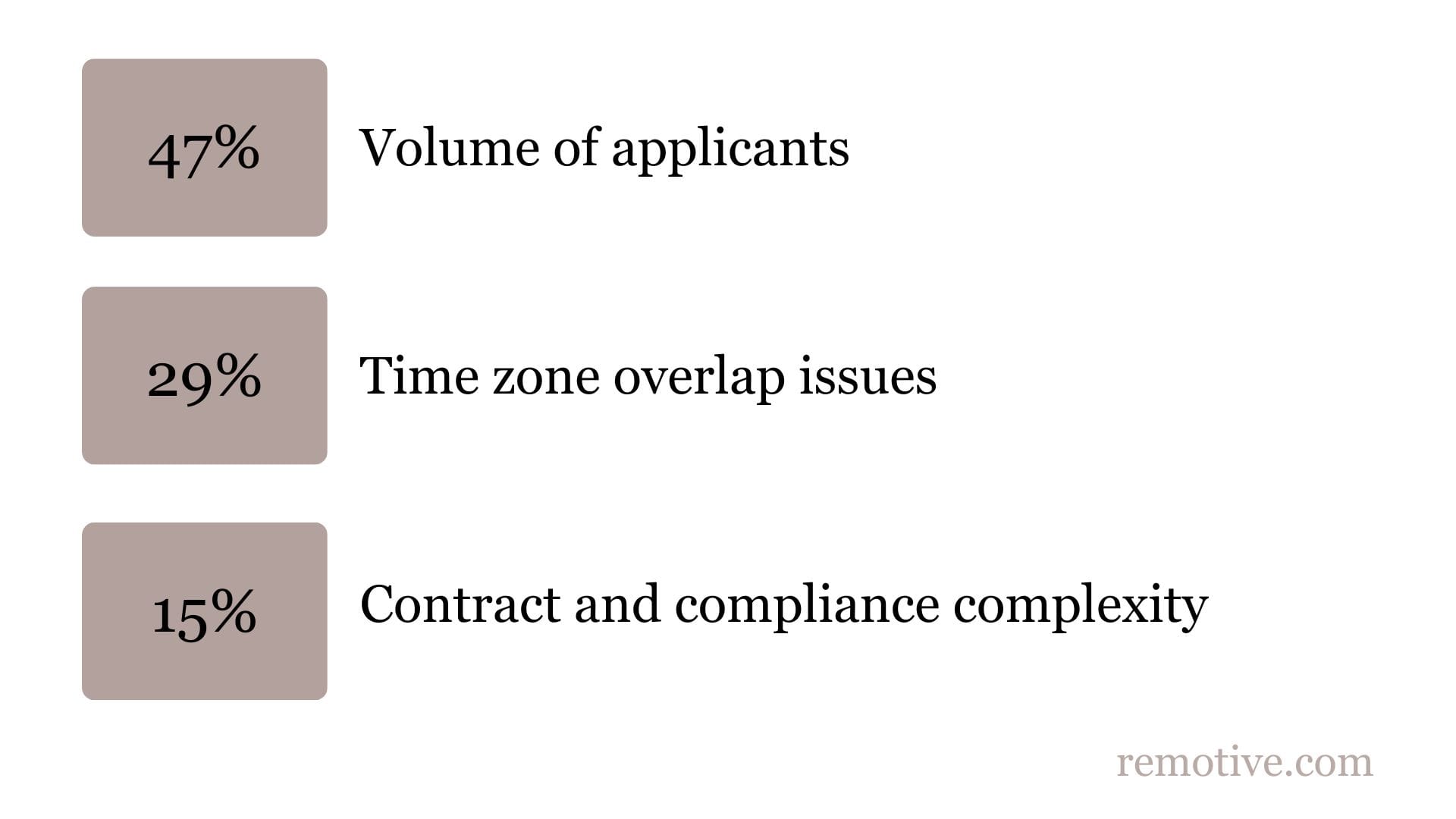
Remote work opens the talent pool, but it also amplifies the noise, the logistics, and the legal layers that hiring teams must navigate.
Possible Solutions:
💧 Write crystal-clear job ads
State salary, location, and remote expectations in a way candidates can spot instantly.
📌 Use geoblockers
They help filter out bulk applicants who apply without fully reading the description.
🌐 Choose the right hiring model for international hires
Decide whether to hire someone as an employee, contractor, or through an EOR (Employer of Record) / global-payroll provider. Misclassification risks, compliance requirements, and local labour laws differ significantly across models.
📕 Map out local labour laws when outsourcing
Understand tax rules, employment protections, termination regulations, and data-privacy obligations before extending an offer.
✓ Standardize global hiring and compliance processes
Maintain a centralized system (or partner with an EOR/compliance provider) to manage contracts, payroll, tax withholding/reporting, data privacy, and cross-border requirements.
💰 Offer competitive, context-aware compensation and benefits
Balance internal pay equity with local cost-of-living benchmarks and regional market standards to stay attractive and fair across all locations.
Remote Work: The Long Game
Remote work arrived like a tide. It existed before, but the pandemic — a moment we’d gladly forget — pushed it into mainstream culture. That tide swept away many long-established traditions built around office life, along with assumptions we once considered constants.
When looking at the broader picture of where remote work stands today, key takeaways are:
🏙️ Remote work didn’t just change how we work — it reshaped entire city ecosystems. Empty offices shifted retail patterns, shrank commutes, eased traffic, and reduced the need for constant business travel.
🌍 Its impact reaches far beyond individual workers or companies. Remote work is reviving overlooked places, redrawing economic maps, and even influencing our collective environmental footprint.
🌊 Like any tide, it always comes back. RTO waves may rise and fall, but the real question for 2026 and years to come isn’t whether remote work persists — it’s how much further its return will transform the world around us.
Keep following Remotive as we explore — with curiosity and a front-row seat — how this tide continues to shape the world around us.
Before we wrap up, a quick reminder: ❣️ Remotive is a premium job board designed to make remote job searching easier by curating a high volume of thoroughly vetted listings. We want to give recruiters visibility, give job seekers meaningful opportunities, and support both sides with clear insights and helpful resources.

